Andrey Dodonov on the Mystery of Instrumental Music
Composer and guitarist Andrey Dodonov talks about writing instrumental music, arranging for guitar and orchestra, and what to listen for in “Svetlaya.”
Interview translated from Russian.
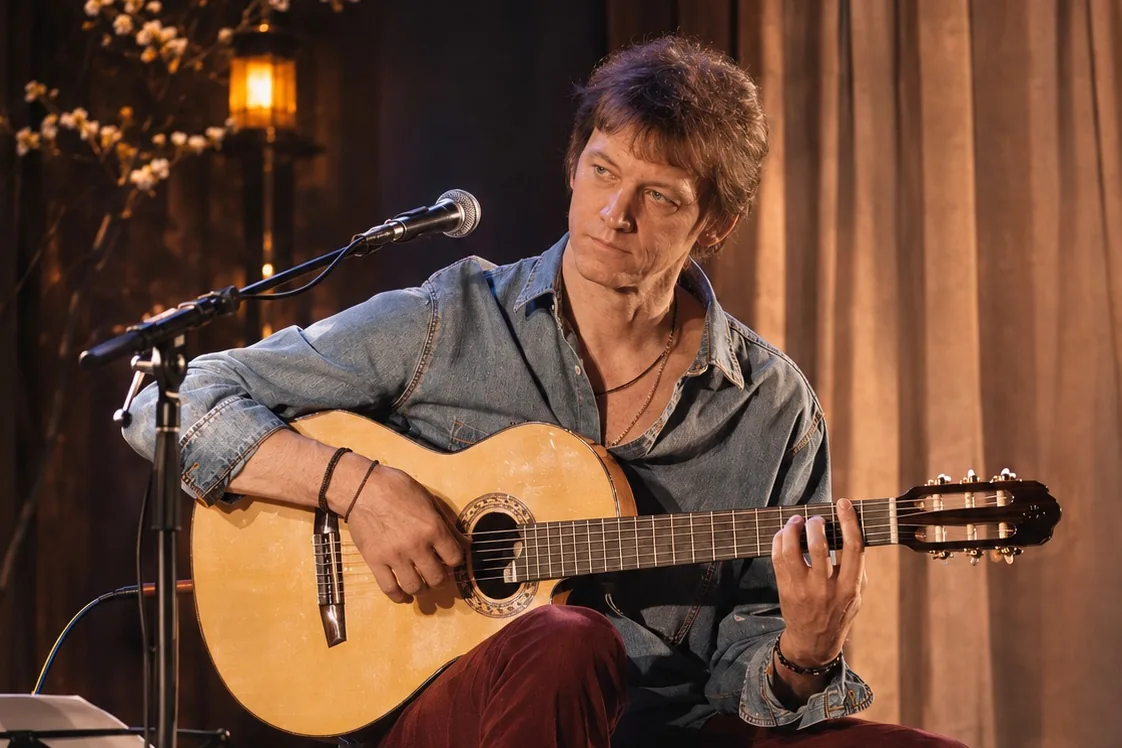
Composer and guitarist Andrey Dodonov tells stories through instrumental music. His pieces grow out of memories, images, chance harmonies, and feelings he wants to put into sound. In this conversation with Independent, he remembers the concerts he heard as a child and the music he once wrote in a dream. He explains what draws him to the mystery of music without words and takes us through three moments in “Svetlaya” (Светлая).
The Music He Heard in a Dream
What's the earliest musical memory you can picture as a scene? Where were you, what was playing, and who was there?
It's hard to pick just one. A few moments come to mind. I can't remember which came first, but I think I was about three or four.
First there were the songs in the movies The Elusive Avengers and Wedding in Malinovka. The movies themselves didn't mean much to me then, but the songs got me. I'd memorize them on the spot and sing them: “I met Marusya on the sandy riverbank…” and “Hide the girl behind a tall fence…”
Then there were the concerts at the Officers' Club where I grew up. Professional musicians played there, some of them quite famous. I had no idea at the time, but I remember Eduard Khil and Mulerman very well. Khil singing “The ceiling is made of ice…” and a military ensemble performing “From Dawn to Dawn” made a particular impression. Those became the signature numbers in my preschool repertoire!
The third memory is of my family getting a Dnepr tape recorder. Alongside the popular singers of the day, like Magomayev, Kristalinskaya, and Obodzinsky, we started hearing Romani songs at home. I can still hear them.
How did you start composing? Do you remember the first piece that felt like something you wanted to say yourself?
I was eighteen or nineteen and deep into heavy rock. I knew most of the songs by Led Zeppelin, Deep Purple, Black Sabbath, and others by heart. Tape recorders were forbidden at the military academy I attended, so there was no way to listen to that music. Playing a song back in my head was a way to enjoy it anyway.
One night I was listening to something that way and fell asleep. In the dream I could hear Rainbow's “Stargazer” in every detail. I heard every instrument and loved it. I woke up and kept playing it back in my head. Then I realized it wasn't “Stargazer” at all. It was a completely different piece, in a similar style and with an orchestra, but it was something else entirely.
I was so happy I could barely breathe. I'd written music in my sleep! I could hear it all clearly: the melody, what came in where, which instruments played. I stayed awake for a while. It was summer and the sun was coming up. I pictured myself sharing the piece with my music-loving friends the next day, and I fell back asleep happy.
The call to get up rang out, and we lined up for formation. I was stunned and then crushed. I couldn't remember a single phrase I'd written in the dream. All I had left was the feeling! There was no way to convey that to my friends. They were already looking at me that morning like I'd lost my mind.
Finding a Musical Language
What kind of musical education did you have? Who or what influenced you most?
I never really had a traditional music education. A lot of things influenced me, including other art forms. My parents were very musical. They both had a good ear and sang well. My mother and her sisters sang old Russian and folk songs beautifully, finding the harmonies together without knowing a thing about thirds or fifths. Of course that had an effect on me.
Later I spent time with professional musicians: guitarists, accordion players, singers, and arrangers. I picked up something from each of them. But as far as composing goes, I think the biggest influence was simply being an avid listener. I had a large collection across many styles and genres, and I listened closely to all of it.
How would you describe your music to someone who has never heard it? What genres come closest?
Broadly speaking, I would call it popular music, though I wouldn't call it mainstream pop. You have to listen and follow the thread of the piece. They're short stories, but they have a sense of development and something to say.
On the album Em, the guitar usually tells those stories with an orchestra behind it. You could call that a classical approach. “White Dance in the Night” is rock, symphonic rock, and “A Walk” has touches of jazz.
Why did you choose instrumental music? What can it express more precisely than words?
There's more mystery in instrumental music, more left unsaid. It asks more of the imagination. That gives you a way to express your most private thoughts and deepest feelings. That's the short answer!
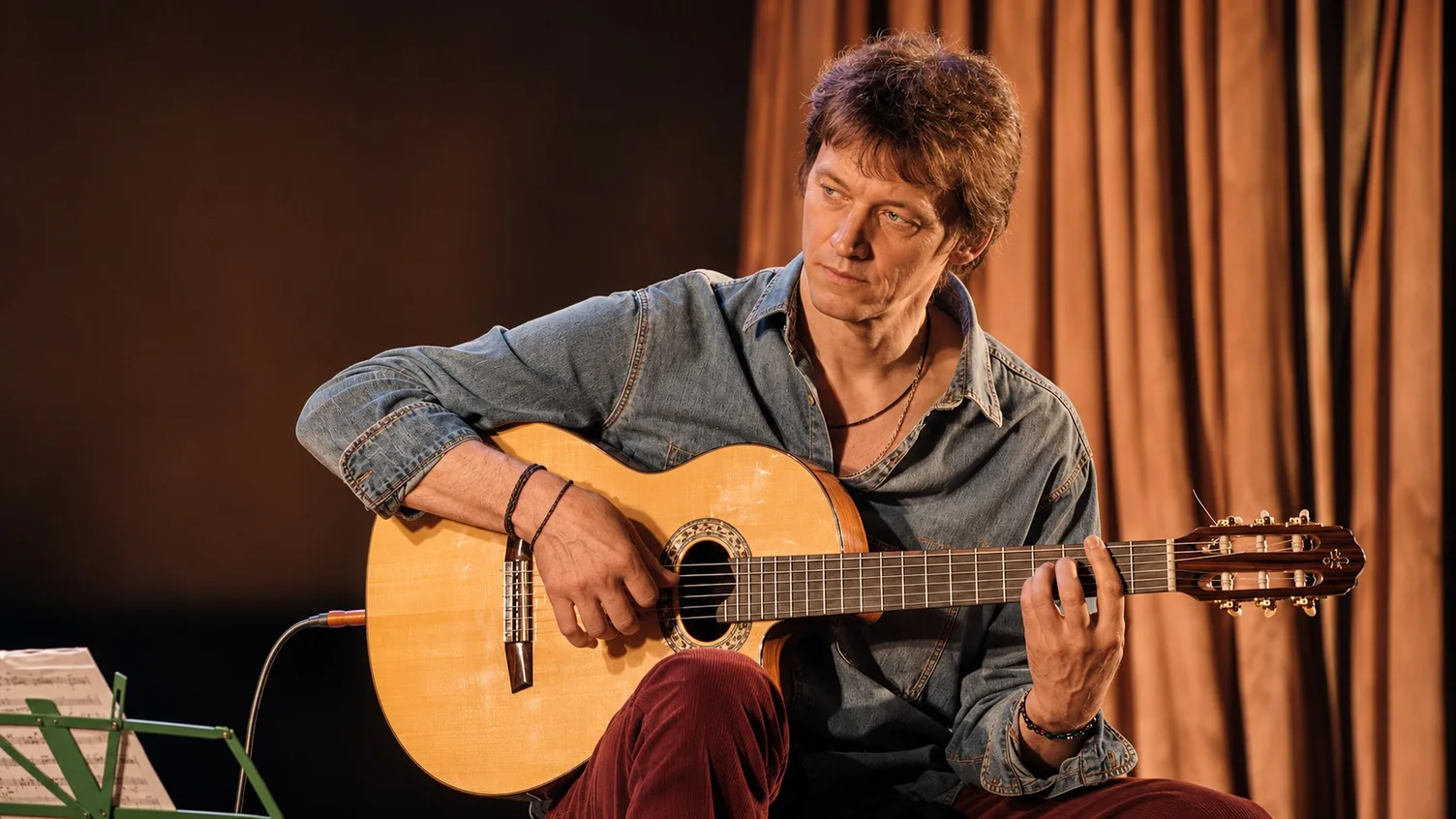
How an Instrumental Piece Takes Shape
Where does a new piece usually begin: with a melody, a harmony, a rhythm, a particular sound, or a feeling?
It varies. Sometimes I can't tell what came first. I think it's usually a feeling. An image or a melody grows out of it.
“Dinner in Paris” came from exactly that sort of feeling: Paris at night, the summer air, a café on the Champs-Élysées, wine. That's where the theme came from. It was one of the first pieces I wrote.
With “A Walk,” I carried around an A minor to G minor riff for a long time. The piece took shape a year or a year and a half later. It's musically interesting, by the way. It takes you through different keys.
How do you develop a musical idea so that a short instrumental piece holds someone's attention?
It's a creative process. Sometimes it's long and painful. Sometimes it happens quickly and almost on its own. It's hard to lay out as a set of steps. The voices, instruments, and harmonies all need to belong there and serve what the piece is saying.
An arrangement can make fairly simple or even aimless music sound respectable. You can dress up a weak idea with an impressive arrangement. I try to develop the idea in the music itself, in the melody. I use the arrangement to give it color and frame it. That role is secondary, but it's still important.
How do you know a piece has enough notes? Have you ever cut a beautiful passage and found the music was better for it?
That's an interesting question! Usually I end up having to cut. Sometimes something just clicks and I know the piece is done.
Sometimes I want to use every idea I've come up with and the piece gets too long. Then I have to start letting things go, however reluctantly. Listeners today aren't especially receptive to long, elaborate instrumentals. I definitely remember cutting a beautiful passage from “Amber Autumn.” The piece made more sense and held together better afterward.
The Story Behind “Svetlaya”
How did “Svetlaya” come about? What was happening in your life when the first bit of music took shape?
There wasn't one particular moment that led me to write it, or at least I don't remember one. What I do know is that the opening theme had been in my head for a long time. It brought up these vivid, romantic, light-filled feelings. I barely had to think about the title, and the piece came together quite easily.
I worked on it in a few different places, but what I remember most clearly is writing it on the coast in Thailand. The sea, the sunrise…
What does the title “Svetlaya” mean? Did it come before the music or after the piece took shape?
As I mentioned, this was one of those times I didn't have to think about the title. It came from the images that stayed with me as I wrote: the sun, daybreak or the first moments of sunset, the line of the horizon, a light, easy movement forward into an inviting unknown.
The Russian title “Светлая” can mean “bright” or “full of light.”
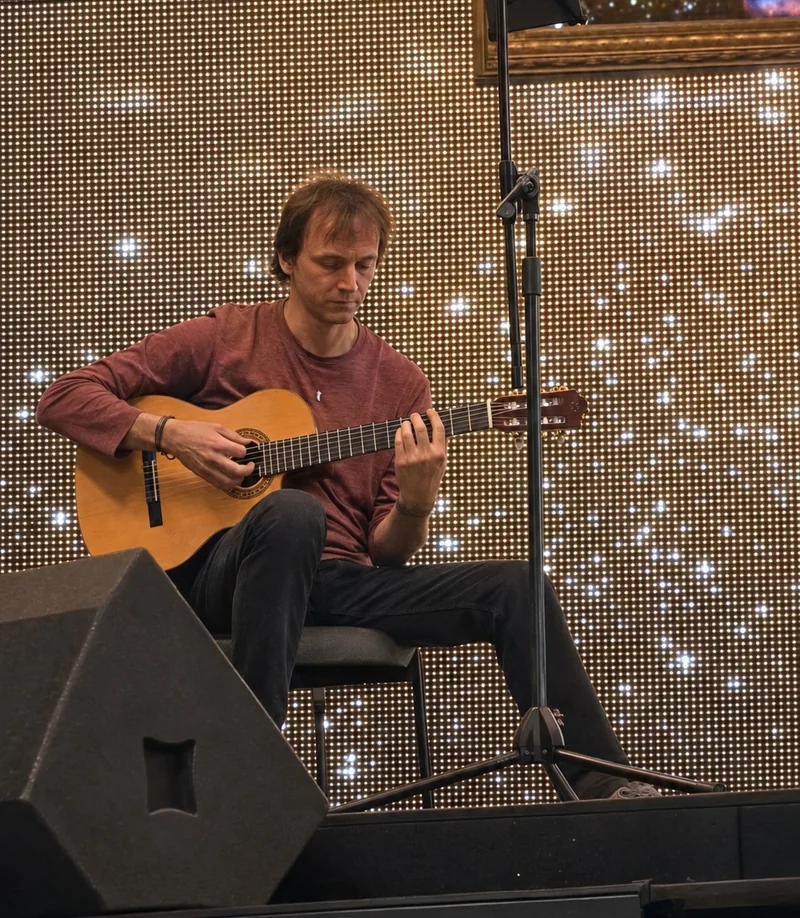
From Guitar to Orchestra
Which two or three moments in “Svetlaya” should listeners pay attention to?
At 1:24, after the second verse, there's what musicians call a brief shift in key. The theme moves into a different key. For me that suggests coming across something new, unexpected, and interesting along the way.
At 2:11, after the interlude, we play in a different position. The theme has a slightly different mood, a more life-affirming one.
I also like the closing phrases. They repeat three times. The third, starting at 3:38, brings the piece to a close with a trace of sadness, but there's light in it.
How does the released version of “Svetlaya” differ from the original idea?
It followed quite naturally from the original. I played it on the guitar, and that take went into the released track in full, without changes.
Who worked on “Svetlaya,” and how did you collaborate?
I wrote the piece and played and recorded the guitar. My friend Andrey Volchenkov did the orchestration.
We've worked out a process. I compose, record the guitar, and explain how I hear the arrangement. He records the orchestral instruments with that in mind. It takes conservatory training or at least the equivalent musical education. Then it comes back to me. Andrey and I use the same software and sound libraries. I make adjustments to bring the piece in line with what I first had in mind, and that's how it comes together.
From the First Idea to the Recording
What instruments do you compose on, and which parts do you play yourself?
I usually compose on guitar. Sometimes I take what's in my head and work it out on the instrument. Other times I play something and it gives me an interesting musical turn or an image to work with.
A few melodies came from the flute or harmonica. I play the acoustic guitar parts myself, and I also play harmonica and recorders on tracks such as “Turkish” and “Princess.”
What does the process look like from the first sketch to the recording?
A theme comes to me. It's a good thing we have voice recorders now. If I remember, I record it. I listen again after some time has passed. If it moves me, I keep it. If I hear where it could go next, I start living with it and working on it.
It varies. Sometimes it develops smoothly. Other times I spend a long while trying things and listening back to see whether it's going in the right direction.
What kind of sound do you look for: something intimate or a bigger studio sound?
It depends on the piece. Guitar and orchestra call for something closer to a classical sound. Electric guitar with a rhythm section needs a rock sound! That comes together in the arrangement, the mix, and the mastering.
When do you know the work is finished?
That's one of the most interesting questions. You can work on a piece forever. If something is clearly bothering me or I don't like it, of course I'll deal with it. After that, though, it often takes an act of will to stop tinkering.
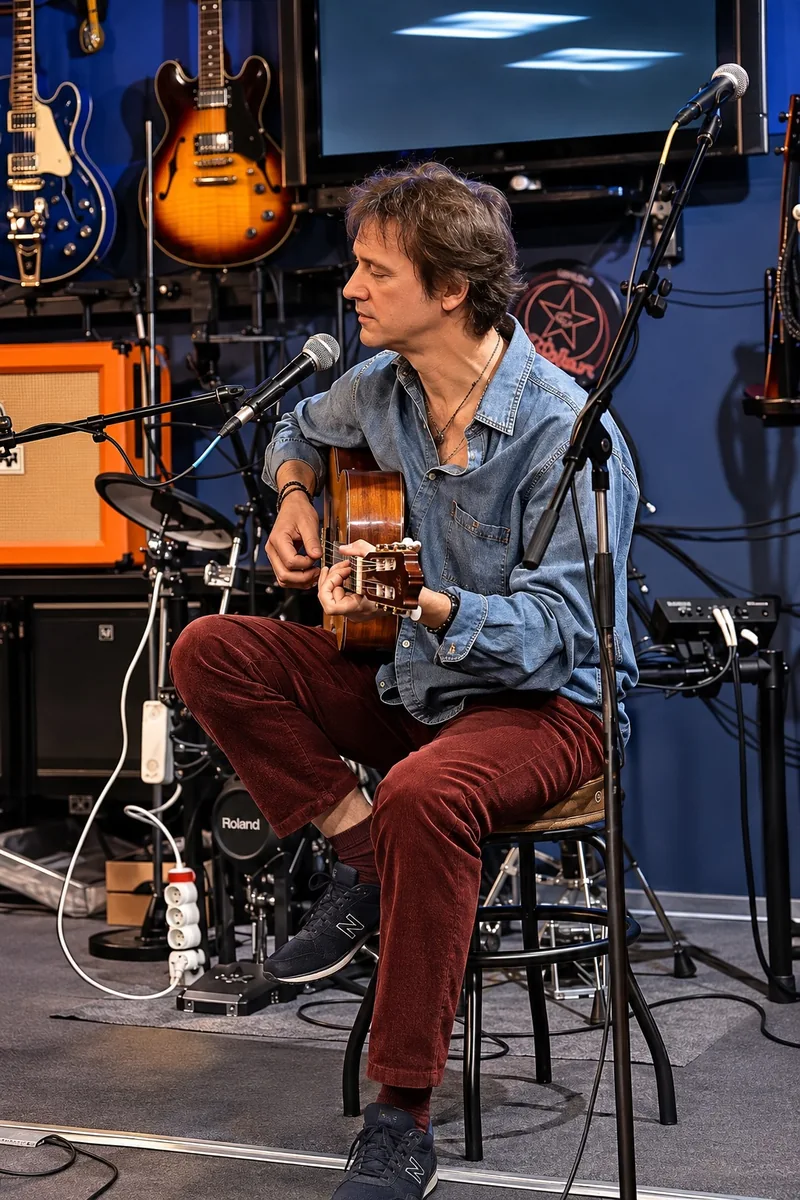
Listen to Andrey Dodonov
Find Dodonov’s recordings on Apple Music and Spotify, or visit his YouTube channel. His suggested starting points are “Dinner in Paris” (Ужин в Париже), “White Dance in the Night” (Белый танец в ночи), and “A Walk” (Прогулка).
Where to Start Listening
Titles like “Spring Rain,” “Children's Piece,” “Lyrical Piece,” and “When the Lilacs Bloom” suggest vivid images. Are they tied to particular events?
It depends. Some pieces came from specific events or people. Others, like “Children's Piece,” grew out of images that came to me as I wrote. “Spring Rain” only got its name after I'd arranged it!
“Dinner in Paris” is probably one of the clearest examples. There were particular people and a particular place. It even has a sequel, “A Memory.”
Which three pieces would you recommend to a new listener, and in what order?
The hardest question of all. But for someone getting to know my music, I'd go with “Dinner in Paris” first, then “White Dance in the Night,” then “A Walk.” If you want a fuller picture, add “Sad Piece,” if you're willing to sit with it a little longer!
How is your musical language changing? What would you like to try next?
I'd say it's expanding. I have material I could develop into ambient music, and I'm thinking about how to present it. I have music for songs that don't have lyrics yet. I'm also working on some symphonic rock projects.
What would you say to someone about to hear your music for the first time after reading this interview?
Listen without straining. It's not Mahler. Stay with it, though, so you can follow the thread and feel what I was trying to tell you.